
Water Damage Restoration Rochester MN
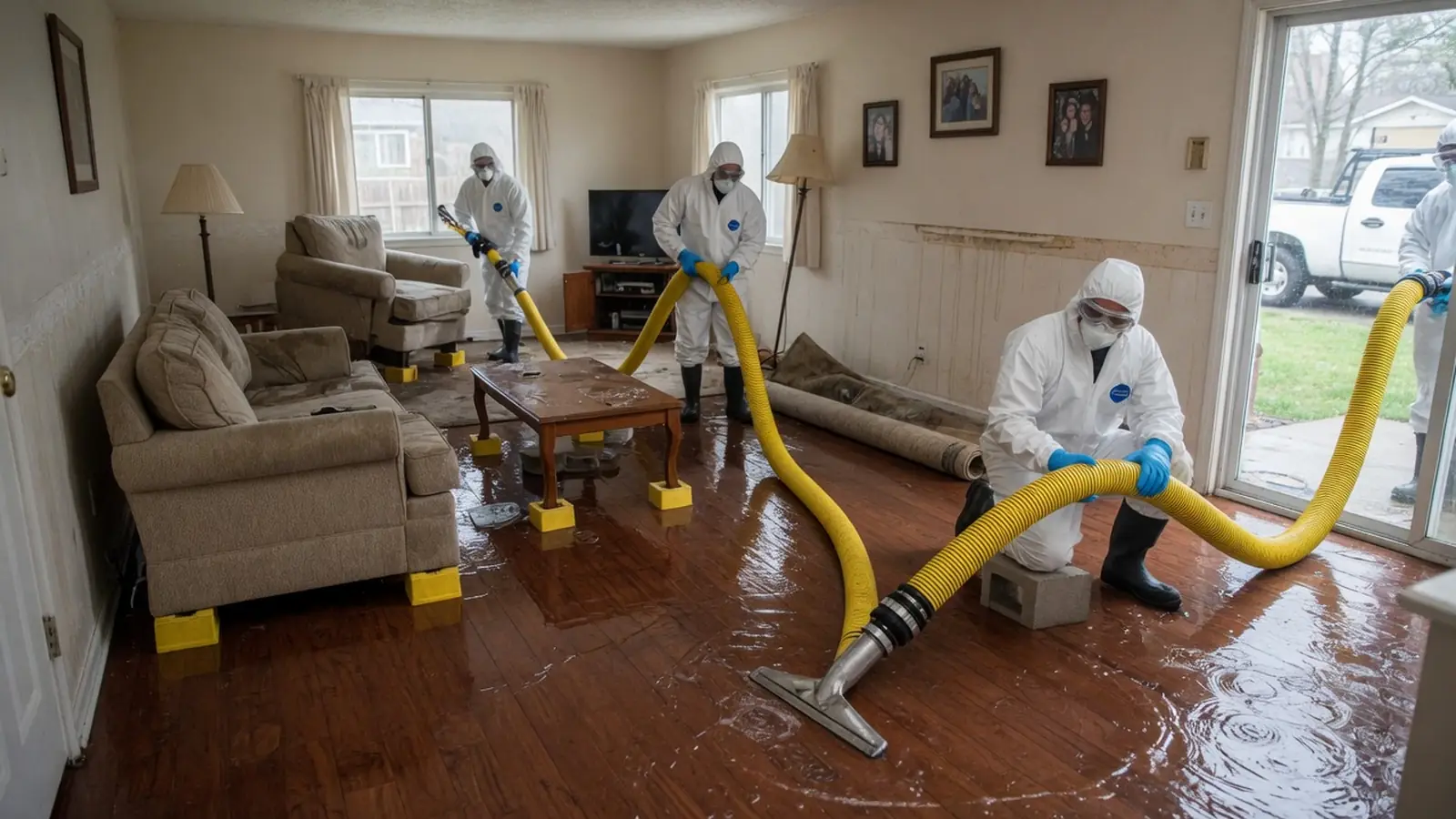
When a ruptured interior pipe rapidly inundates living quarters and penetrates subflooring into the basement, requiring urgent structural drying and demolition, our emergency crew responds immediately. We deploy commercial water extractors and high-capacity dehumidifiers to protect structural framing and stop secondary microbial growth. Reach our dispatch specialists around the clock for honest assessments and prompt mitigation.
Pipe still spraying? Call (507) 555-0168.
Prefer to talk? (507) 555-0168
Precision Drying And Structural Care
Our technicians bring hands-on restoration experience across local residential neighborhoods and commercial properties.
About 20% of local housing units (10,713 of 52,851) were built before 1960, the era of galvanized steel supply lines and cast iron drains prone to sudden internal corrosion failures.
About 9% of area housing units (4,909 of 52,851) were built in the 1960s, overlapping the years aluminium branch wiring was installed that requires thermal safety checks before placing commercial air movers.
About 24% of housing units across our territory (12,844 of 52,851) were built in the 1970s and 1980s, overlapping the years polybutylene supply piping was commonly installed and known to rupture unexpectedly.
About 54% of local housing units (28,466 of 52,851) were built before 1980, the period when asbestos-containing materials and lead paint were still in use, dictating careful containment protocols during demolition.
A pattern echoed in public discussions is when severe storm power outages shut down primary sump pumps, leading to submerged finished basements and high mold risk if not pumped quickly.
If you face moisture intrusion from frozen infrastructure, learn how our technicians thaw lines and restore burst pipes before structural swelling destroys subflooring.
We monitor moisture levels daily with calibrated non-penetrating meters until framing timber reaches regional equilibrium moisture content.
Systematic Water Extraction And Drying
As homeowners often describe in public discussions, prolonged rainfall causes water to penetrate foundation wall cracks and masonry holes directly into the basement. Our phased workflow implements rapid extraction protocols for finished basement flooding to stabilize structural framing, pull hidden moisture out of wall assemblies, and sanitize living areas.
- Emergency Assessment & Extraction. Homeowners often report that spring thaw runoff creates persistent standing water when a sump pump is installed above the lowest point of the basement concrete floor, demanding commercial submersible extraction. We deploy truck-mounted vacuum units to pump out standing water and map moisture depth across saturated drywall.
- Moisture Mapping & Containment. Technicians inspect wall cavities and subflooring with thermal cameras and penetrating moisture probes to isolate damp materials. We establish negative air pressure containment zones to protect unaffected living spaces from humidity and airborne dust.
- Dehumidification & Antimicrobial Wash. We apply botanical antimicrobials and follow certified microbial cleanup and containment procedures to prevent secondary fungal colonization while materials dry. Industrial low-grain refrigerant dehumidifiers extract trapped vapor from building cavities.
- Structural Verification & Restoration. Our team takes daily psychrometric readings until framing lumber reaches dry standard baselines. Once certified dry, we repair trimmed drywall, re-secure baseboards, and return your property to pre-loss condition.
Scientifically Verified Drying Standards
Our drying standards account directly for regional ground moisture pressure. The dominant mapped soils in the local soil survey area (MN109) by acreage are Downs silt loam, 2 to 6 percent slopes, moderately eroded; Downs silt loam, 6 to 12 percent slopes, moderately eroded; Tama silt loam, driftless, 2 to 6 percent slopes; Floyd silt loam, 1 to 4 percent slopes. The single most extensive soil unit mapped around the area is Downs silt loam, 2 to 6 percent slopes, moderately eroded, covering about 42,562 acres of MN109, which holds surface water against foundation walls and drives moisture through unsealed footing seams. We guarantee thorough structural drying verified by thermal imaging and pinned moisture meters before removing equipment.
Storm & Hail Water Extraction
NOAA radar recorded 1,294 hail signatures within about 15 miles between 2021-2025 (2021: 201, 2022: 413, 2023: 233, 2024: 183, 2025: 264). The heaviest recent hail year around the area was 2022, with 413 radar hail signatures inside a 15-mile radius, leaving roofing impacts that cause hidden water penetration into attic framing and finished ceilings.
Basement Drainage & Sump Overflow
Heavy rain and rapid thaw create hydrostatic ground pressure that drives runoff through block walls and foundation cracks. We extract standing slab water, sanitize porous masonry, and dry structural joists using targeted low-grain dehumidification.
Burst Plumbing & Pipe Leak Drying
When pressurized supply lines fail behind finished drywall, water quickly migrates across ceilings and subfloors. Our team cuts clean flood cuts, extracts trapped cavity moisture, and sanitizes framing before warping occurs.
Dedicated Moisture Control And Structural Drying
We respond with industrial water extraction equipment, calibrated thermal imaging, and high-velocity air movers to return building assemblies to safe moisture levels without unnecessary demolition.
- 10Zip Codes Served
- 8Service Areas
- 3Services Offered
Read verified feedback from property owners who experienced sudden water intrusion and relied on our crew for rapid extraction, structural drying, and meticulous property restoration.
“Another contractor offered a bargain price to just blow fans on my wet carpets without pulling the saturated baseboards or checking the insulation. The crew explained why trapping moisture behind the walls would invite hidden mold and did the tear-out properly down to the studs. Paying for real dehumidification saved our main level from a complete rebuild.”
Marcus G.
“When our drain pipe backed up into the downstairs utility room, local code required specific disposal permits and electrical clearance before running heavy industrial drying units. The team arranged the city inspection immediately and documented every moisture reading for our insurance adjuster without missing a single requirement. Having every code compliance sign-off handled on day one made the entire claim process painless.”
Evelyn K.
“Our second-floor supply line fractured late on a freezing Sunday evening while we were getting ready for work the next morning. This company had three technicians at our front door within forty minutes with extractors running and containment barriers set up before midnight. They kept me updated on moisture levels every morning and evening until the framing was bone dry.”
David B.
“After the drying equipment was removed, I watched them hang replacement drywall and feather the mud along our living room wall. You cannot see a single tape seam or uneven joint even when the afternoon sunlight hits the wall directly from the bay window. The baseboard trim was reinstalled dead level and painted to match the original trim flawlessly.”
Brenda T.
Frequently Asked Questions
Can finished basement drywall and baseboards be dried in place, or do they have to be cut two feet above the water line?
Drywall and baseboards can be dried in place if clean water is extracted within 24 hours and the insulation behind the wall remains completely dry. When water originates from drains or groundwater, or when wet fiberglass insulation is trapped in the wall cavity, technicians must cut the drywall two feet above the high-water mark to allow structural framing to dry and prevent hazardous mold growth.
How long does structural water damage drying typically take?
Complete structural drying typically takes three to five days depending on the saturation depth, ambient humidity, and framing materials involved. Commercial air movers and LGR dehumidifiers run continuously while technicians take daily pin moisture readings to verify that framing reaches safe equilibrium moisture levels.
What is the average cost of emergency water damage mitigation?
Mitigation costs depend directly on water contamination category, affected square footage, and whether secondary structural drying is required. Clean supply line leaks caught early require minimal demolition, whereas category two or three groundwater backups require controlled material removal, antimicrobial sanitization, and insurance documentation.
Why does water pool on basement slabs after heavy rain or spring thaw?
Water pools when saturated exterior soil drives runoff through foundation cracks or when a sump pump sits above the lowest point of the concrete. Prolonged rain saturates dense silt loam soils, generating hydro-static pressure against footing joints and masonry cracks that overwhelms standard gravity drainage systems.
Does homeowner insurance cover water extraction and drywall repairs?
Standard policies cover sudden and accidental pipe bursts, while ground water or sump failure usually requires a specific sewer endorsement. Our dispatchers coordinate directly with insurance carriers, providing moisture logs, thermal imaging scans, and detailed line-item documentation to expedite claims.