
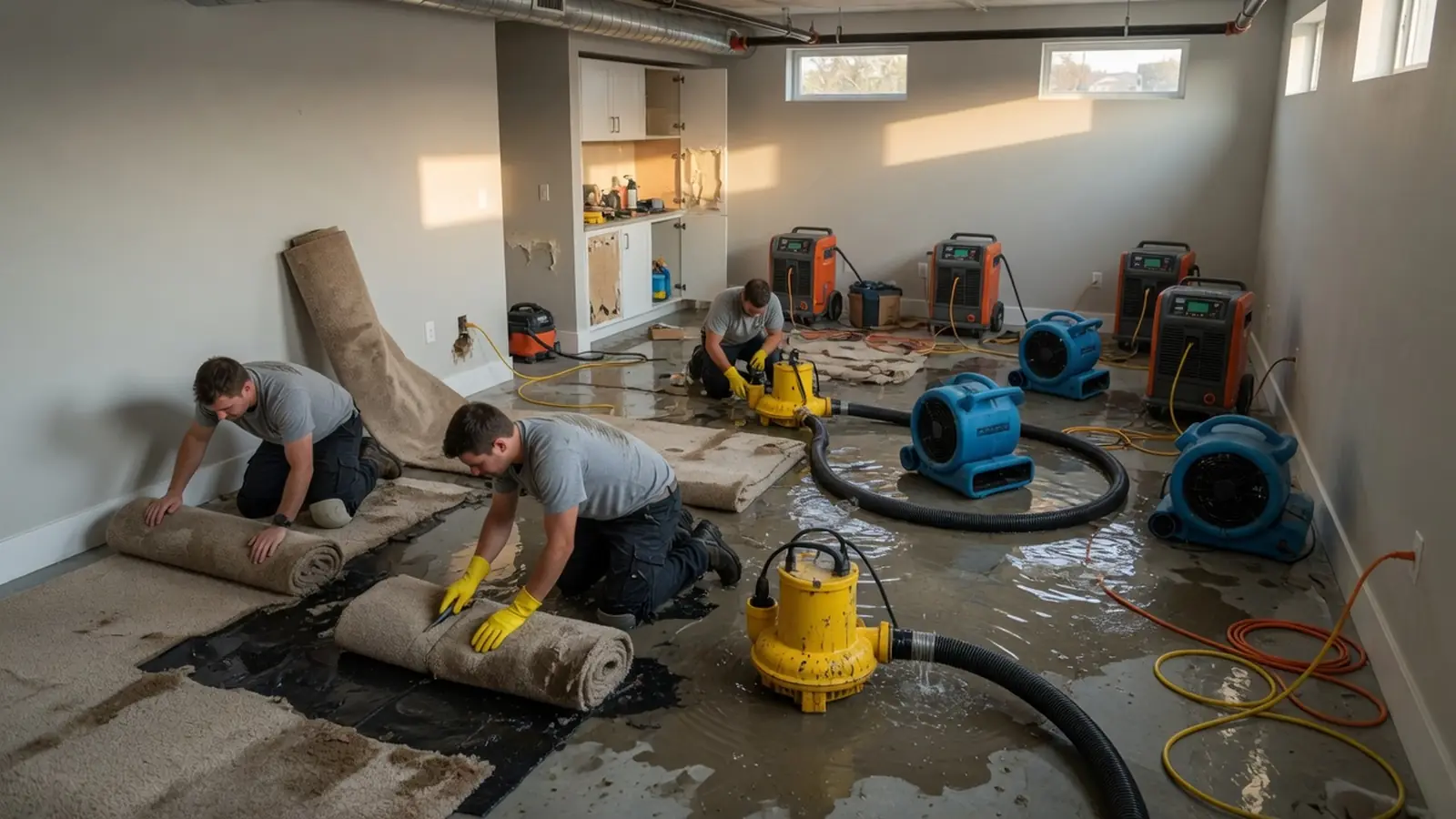
Rochester Basement Flooding
When groundwater or drainage backups flood your lower level, our certified mitigation crew responds promptly with high-volume extraction equipment. We remove standing water, sanitize contaminated masonry, and run commercial dehumidifiers to safeguard structural timbers. Count on our experienced technicians to restore safe, dry living conditions in your home.
Prefer to talk? (507) 555-0168
Dedicated Basement Water Restoration
Our technicians handle subgrade moisture emergencies across established residential neighborhoods near Kutzky Park and surrounding districts.
Rapid spring snowmelt combined with frozen subsoil in Rochester forces groundwater against foundation walls, creating hydrostatic pressure that overwhelms sump pits.
During a recent project near Slatterly Park, our crew extracted four inches of seepage from an older limestone foundation and stabilized ambient humidity within forty-eight hours.
Persistent dampness and musty odors along basement concrete walls cause uncertainty about underlying chronic water damage.
If severe water intrusion has affected your property, schedule immediate water extraction and structural drying to halt moisture spread before framing sustains permanent decay.
We deploy industrial submersible pumps, heavy-duty desiccant dehumidifiers, and thermal imaging cameras to verify that every wall stud dries completely.
Our Step-by-Step Flooding Resolution
We follow strict structural drying standards to stabilize damp basements and eliminate biohazard risks. When sub-zero winter temperatures hit the upper Midwest, protecting your property against burst winter lines requires rapid thermal thawing alongside water mitigation.
- Damage Assessment And Source Tracking. We map moisture boundaries using non-invasive thermal sensors and inspect foundation perimeters. Prolonged rainfall causes water to penetrate foundation wall cracks and masonry holes directly into the basement.
- Standing Water Extraction. Our team operates submersible pumps and weighted extraction claws to draw out standing pools. Spring thaw runoff creates persistent standing water when a sump pump is installed above the lowest point of the basement concrete floor.
- Sanitization And Drain Decontamination. We apply antimicrobial wash across saturated concrete floors to neutralize contaminants. During severe storms, homeowners often describe how torrential rain events overwhelm local municipal drainage networks, resulting in widespread storm drain backups into residential basements.
- Controlled Structural Dehumidification. We position commercial desiccant dehumidifiers and high-velocity air movers to extract trapped core moisture from sill plates, joists, and concrete subfloors.
Why Our Mitigation Delivers Lasting Protection
We adhere strictly to certified drying protocols, providing transparent documentation and daily psychrometric logs for every project. A pattern echoed in public discussions is that homeowners face repeated basement inundation and cannot easily identify whether water originates from municipal sewer backups or hydrostatic pressure through the foundation. Our team uses precision moisture probes and pressure diagnostics to pinpoint the precise entry pathway before drying begins. Whenever moisture sits behind finished walls for more than twenty-four hours, booking professional mold remediation prevents hidden spores from circulating throughout your indoor living spaces.
Emergency Sump Pump Extraction
Severe storm power outages shut down primary sump pumps, leading to submerged finished basements and high mold risk if not pumped quickly. Our crews arrive with truck-mounted extractors and portable auxiliary pumps to drain standing water immediately.
Water-Damaged Drywall Removal
Local property owners often note that tearing out water-damaged drywall following a basement flood exposes active black mold colonies on structural wall framing. We execute precision flood cuts and treat framing timbers with EPA-registered botanical antimicrobials.
Foundation Moisture Mitigation
Persistent dampness and musty odors along basement concrete walls cause uncertainty about underlying chronic water damage. We run deep-penetrating desiccant systems to draw subterranean dampness out of porous cinder block and poured foundations.
Dedicated Subgrade Water Mitigation Standards
Every basement flooding event demands methodical moisture mapping and rigorous drying verification. Our team operates certified extraction tools and industrial desiccant air movers to restore structural integrity without cutting corners.
- 10Zip Codes Served
- 4Service Areas
- 3Services Offered
Read honest feedback from local homeowners who experienced basement inundation and trusted our crews to dry and protect their homes.
“When three feet of groundwater filled our lower level, the crew gave us a firm written price before touching a single pipe. They stuck exactly to that initial figure without adding any surprise change-orders or hidden fees later. Having honest pricing during a sudden crisis made a stressful week much easier to handle.”
Marcus V.
“Water extraction was noisy work, but the crew swept and sanitized our utility hallway before heading out every single evening. They taped down protective runners across our main entryway and packed up their heavy cords neatly each night. Our home stayed orderly and safe for our kids throughout the multi-day drying process.”
Elena R.
“I received clear photo updates and moisture-reading logs sent straight to my phone every morning without having to chase anyone down. The technician texted me when equipment was adjusted and explained what the drying metrics meant at each stage. That steady stream of communication gave our family total peace of mind.”
Derek S.
“Instead of pushing for an expensive subfloor system, the technician walked us through moisture-resistant barrier options that protected our concrete slab at half the price. They explained how closed-cell materials prevent moisture wicking much better than standard underlayment over the long run. Their practical advice saved us thousands on restorative materials.”
Brenda K.
Frequently Asked Questions
How quickly should water be removed from a flooded basement?
Standing water should be extracted within twenty-four to forty-eight hours to stop structural decay and prevent active mold growth. Rapid extraction prevents moisture from wicking upward into wall studs, floor joists, and finished drywall materials.
What causes basement flooding during early spring?
Rapid snowmelt running across frozen winter subsoil creates elevated hydrostatic pressure that forces groundwater through concrete slabs. When exterior ground remains frozen, melting snow has nowhere to absorb and pools directly against foundation walls.
Does homeowners insurance cover flooded basement cleanup?
Coverage typically depends on whether water came from sudden internal pipe failures or subgrade seepage requiring separate flood riders. Sudden mechanical failures or plumbing supply breaks are commonly covered, whereas groundwater seepage requires specialized endorsements.
How long does the structural basement drying process take?
Complete basement drying typically takes three to five days using industrial dehumidification equipment and continuous moisture monitoring. Porous concrete slabs and dense framing timbers require sustained airflow and low ambient humidity to release trapped moisture.
How do technicians distinguish sewer backups from foundation seepage?
Technicians isolate entry points by inspecting drain stacks, checking perimeter masonry cracks, and testing standing liquid for biohazards. Municipal storm backups typically push contaminated waste up through floor drains, while hydrostatic pressure forces clear groundwater through wall cracks.